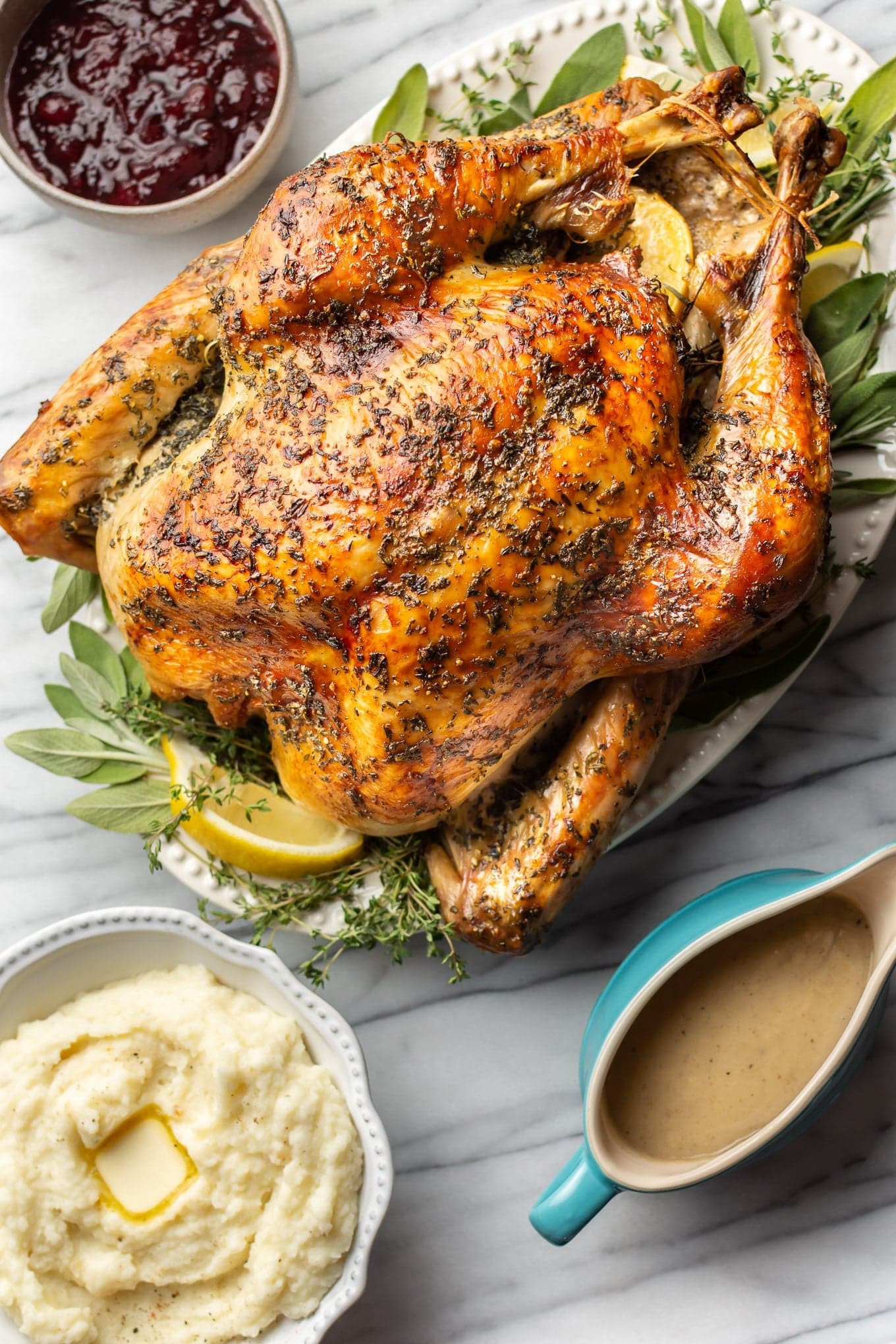
Herb and Butter Roasted Turkey with White Wine Pan Gravy
By Ava Mitchell
Prep
20 min
Cook
180 min
Total
240 min
Servings
8
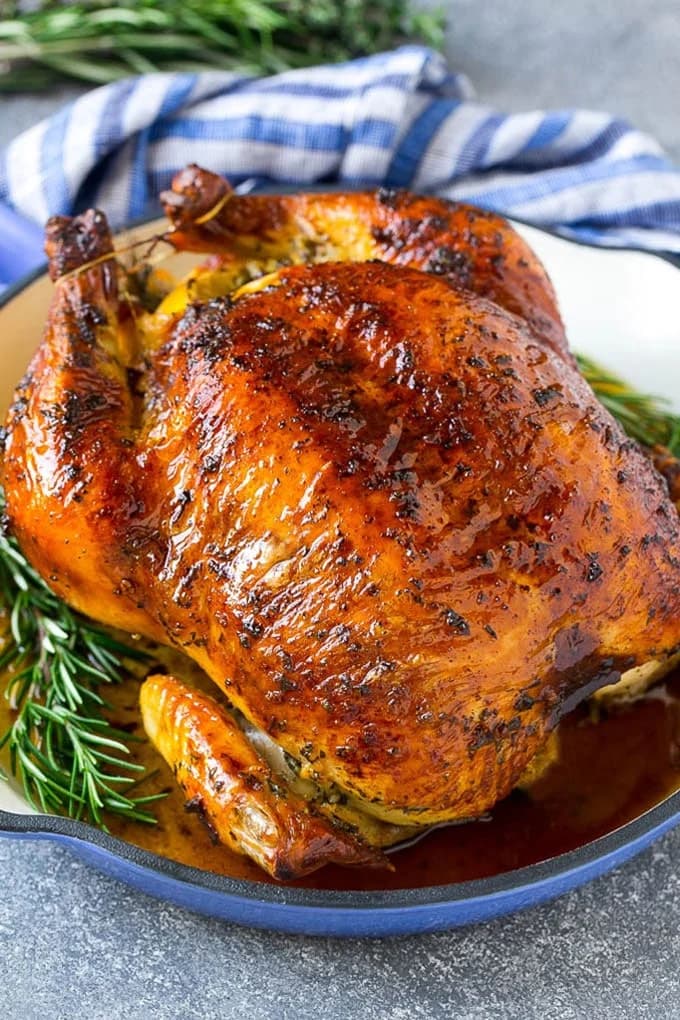
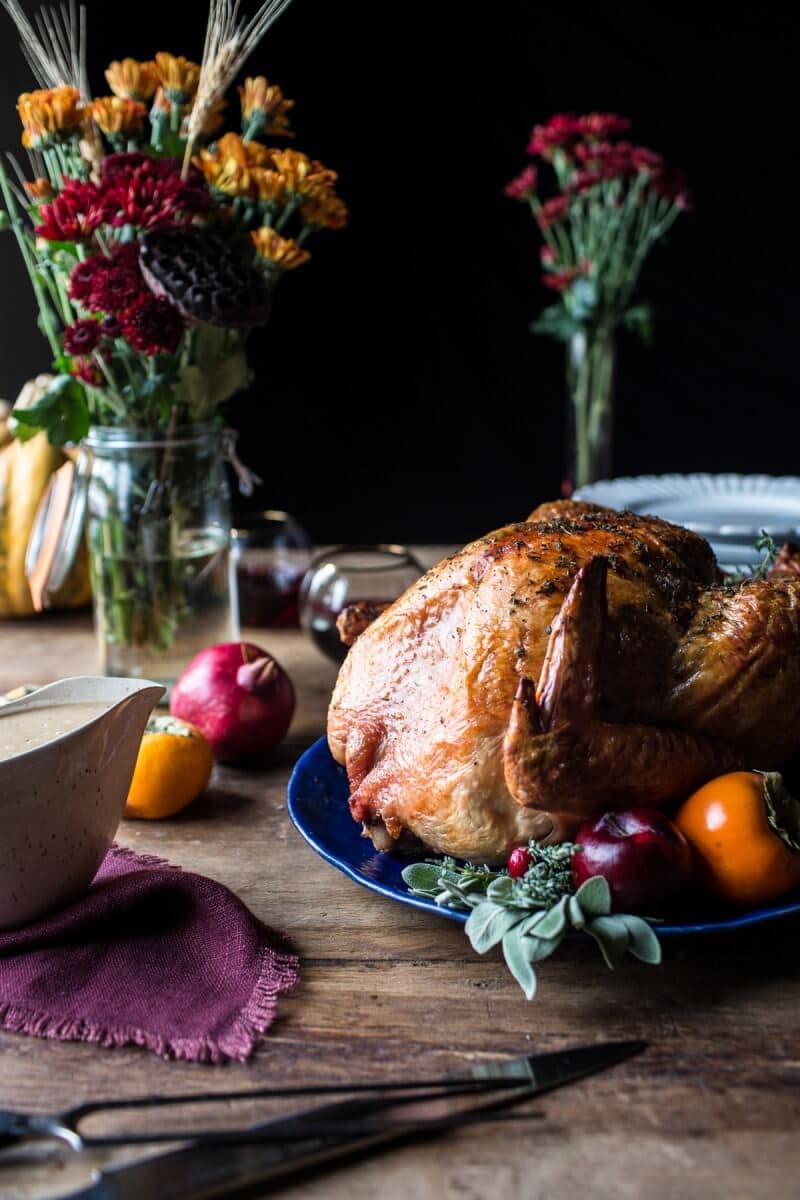
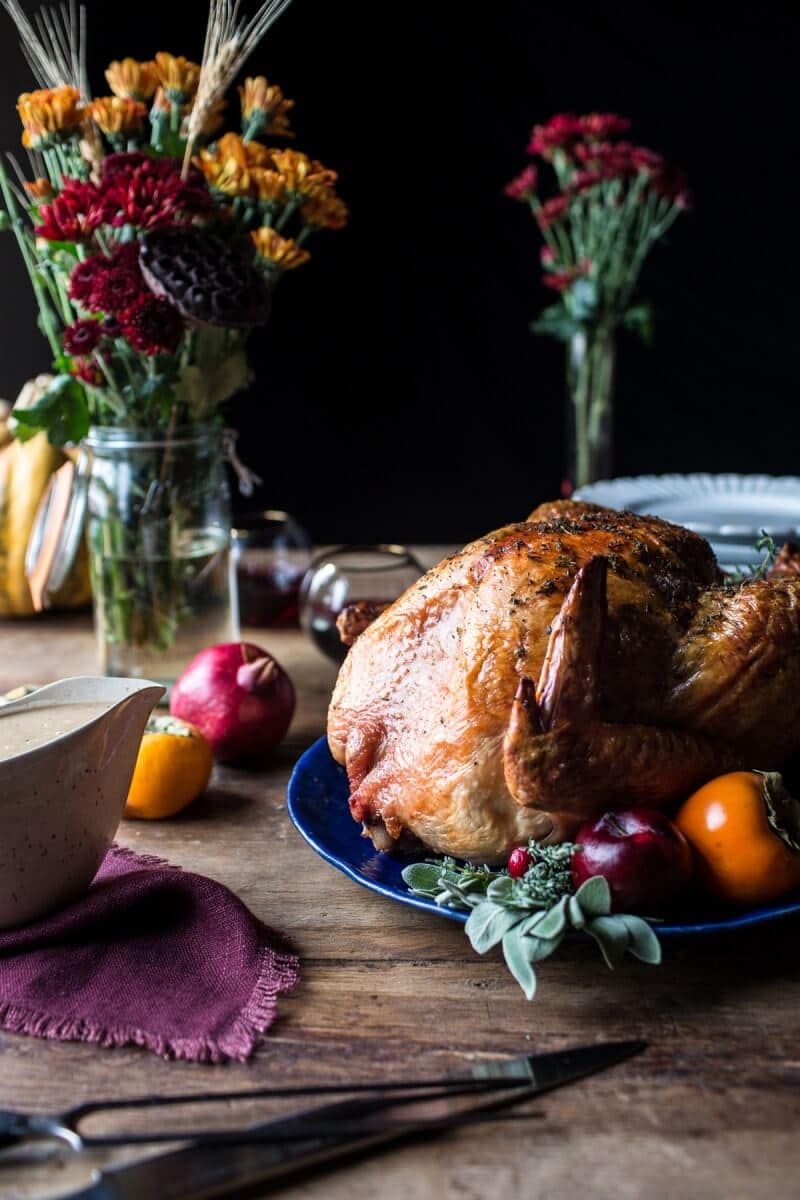
Roasting this turkey beneath butter-soaked cheesecloth protects the skin from scorching while continuously coating the bird in herb butter. The result is a classic roast turkey with browned skin, moist meat, and fresh sage, thyme, parsley, and lemon zest.
The herb butter is worked beneath and over the skin, where it seasons the meat directly and helps flavor the exterior. Sage, thyme, parsley, lemon zest, kosher salt, and pepper make the butter, while halved lemons, garlic, and onion fill the cavity. The roasting pan starts with chicken or turkey broth, creating drippings for the white wine pan gravy.
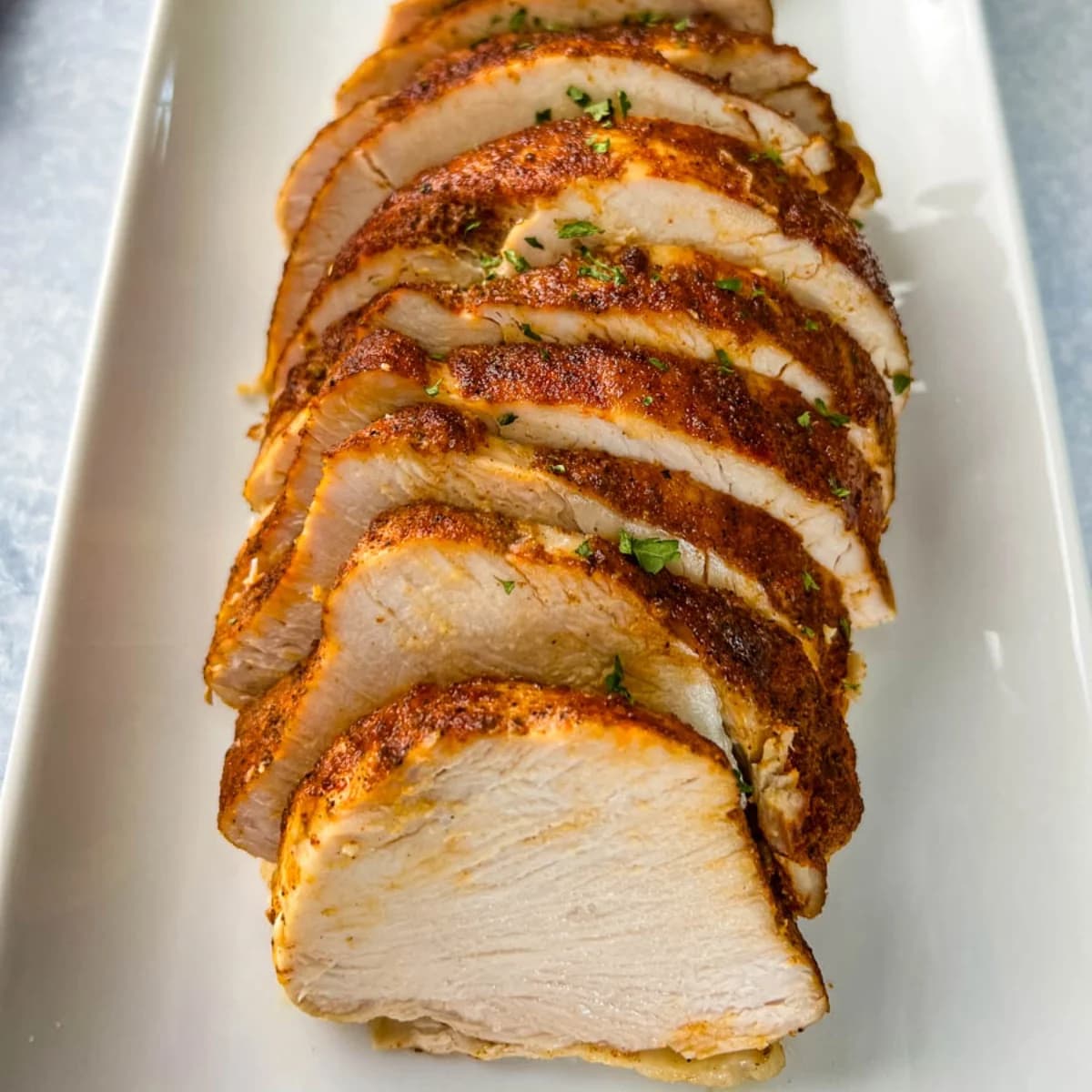
Begin at 450°F, then lower the oven to 350°F after 45 minutes so the exterior gets color before the turkey finishes more gently. The key cue is a 160°F reading on a meat thermometer. Rushing the rest is the main mistake: after the cheesecloth comes off, loosely tent the turkey and let it stand 20 to 30 minutes before slicing.
For gravy, scrape up the browned bits with white wine, then cook butter and flour until golden before whisking in the reserved drippings and broth. Serve the warm gravy alongside carved turkey. The compound butter can be made up to a week ahead and kept covered in the refrigerator.
Why you'll love this recipe
- Butter-soaked cheesecloth shields the turkey skin during roasting while continually basting it, helping it brown without needing a foil tent.
- Herb butter goes beneath the skin, where sage, thyme, parsley, lemon zest, salt, and pepper season the meat rather than only the surface.
- Starting at 450°F builds early color, while reducing to 350°F lets the turkey finish roasting without relying on one aggressive oven temperature.
- Pan broth and turkey drippings become the gravy base, so the roasted bits scraped from the pan contribute directly to its savory character.
- Cooking the butter-and-flour mixture until golden gives the gravy a cooked flour base before wine and broth are whisked in.
- A 20- to 30-minute rest after roasting gives the turkey time to settle before carving, instead of slicing immediately after oven heat.
Ingredients
- •1 turkey (14-16 pound, giblets and neck removed)
- •2 sticks unsalted butter (1 cup, at room temperature)
- •2 tbsp fresh sage (plus more for stuffing the bird)
- •2 tbsp fresh thyme (plus more for stuffing the bird)
- •3 tbsp fresh parsley
- •1 lemon zest (zest of 1 lemon)
- •3 tsp kosher salt
- •1.5 tsp black pepper
- •1 piece double-lined cheesecloth (large)
- •2 lemons (halved)
- •1 head garlic (tips sliced off)
- •1 onion (halved)
- •7 cups low-sodium chicken or turkey broth (7-8 cups)
- •1 cup white wine
- •4 tbsp salted butter
- •6 tbsp all-purpose flour
- •turkey drippings
- •2 cups low-sodium chicken or turkey broth (2-3 cups, as needed)
- •1 tbsp fresh sage (chopped)
- •kosher salt and black pepper (to taste)
Instructions
- 1
Remove the turkey from the refrigerator one hour before roasting.
- 2
Remove the giblets and neck and allow the turkey to come to room temperature.
- 3
Combine 1 stick of unsalted butter, sage, thyme, parsley, lemon zest, kosher salt, and black pepper in a medium bowl.
- 4
Preheat the oven to 450°F.
- 5
Position an oven rack in the lower third of the oven.
- 6
Place the turkey in a large roasting pan.
- 7
Season the turkey cavity with salt and pepper.
- 8
Fill the cavity with the halved lemons, garlic, and onion.
- 9
Gently lift the turkey skin with your fingers, working between the skin and the body of the bird.
- 10
Rub the herb butter under the turkey skin and spread some over the top of the skin.
- 11
Melt the remaining 1 stick of unsalted butter over low heat on the stove or in the microwave.
- 12
Dampen the cheesecloth with warm water and squeeze it dry.
- 13
Submerge the cheesecloth in the melted butter until it is fully soaked.
- 14
Lay the butter-soaked cheesecloth over the turkey, covering most of the bird.
- 15
Drizzle any remaining melted butter over the turkey.
- 16
Pour 4 cups of chicken or turkey broth into the bottom of the roasting pan.
- 17
Roast the turkey for 45 minutes at 450°F.
- 18
Reduce the oven temperature to 350°F and continue roasting for another 2 hours, until the turkey registers 160°F on a meat thermometer.
- 19
Add 1-2 cups of broth halfway through roasting.
- 20
Baste the turkey with the drippings twice during cooking and rotate the roasting pan when basting.
- 21
Remove the turkey from the oven and remove the cheesecloth.
- 22
Transfer the turkey to a cutting board, tent it loosely with foil, and rest it for 20-30 minutes before slicing.
- 23
Strain the liquid from the roasting pan and skim off most of the fat.
- 24
For easier fat removal, pour the broth into a 4-cup measuring cup and place it in the freezer for 10 minutes.
- 25
After skimming, add enough broth to make about 4-5 cups of combined drippings and broth.
- 26
Place the roasting pan over two burners and add about 1/2 cup white wine to deglaze it.
- 27
Scrape up the browned bits from the bottom of the roasting pan.
- 28
Add the salted butter to the deglazed roasting pan.
- 29
Once the butter melts, add the flour and whisk to combine.
- 30
Cook, stirring constantly, until the mixture is golden, about 5 minutes.
- 31
Increase the heat to medium-high and whisk in the remaining 1/2 cup white wine, allowing it to reduce.
- 32
Slowly add the reserved broth, stirring constantly, until the gravy is smooth.
- 33
Stir in the chopped sage and continue stirring until the gravy thickens to the desired consistency, about 8-10 minutes.
- 34
Season the gravy to taste with kosher salt and black pepper.
- 35
Serve the gravy warm with the turkey.
FAQ
Nutrition (per serving)
Calories
671
Reviews
Pin this recipe
Tap an image to save it to Pinterest.