
The Best Asian Recipes for Family Dinners
This article provides recipes for Asian cuisine useful for family meal planning and preparing meals on the weekend. Recipes include dishes such as rice bowls, crisp sauced chicken, sesame beef, crab rangoons, warming clear soup, and herb-scented shrimp with rice. Taste profiles of these dishes include sweet and spicy and sour and savory.
Why These Asian Recipes Work
- Quick Weeknight Meals: Korean ground beef bowls and sesame beef stir-fry are fast rice and sauce-based meals you can make easily on the stovetop.
- Weekend Pan-Fried Dishes: Shredded chicken, General Tso's chicken, and crab rangoons are dishes that can be prepared on weekends if you want to offer fried dishes.
- Family Meal Ideas: Herb and saffron shrimp and rice dishes and tofu bulgogi bowls and a broth-based soup offer several main dishes and a starter.
- Family Favorites: Different sweet, spicy, salty, and sour sauces can provide different tastes for family meals without preparing the same category of food.
1. Persian Shrimp Rice with Herbs, Saffron, and Quinoa
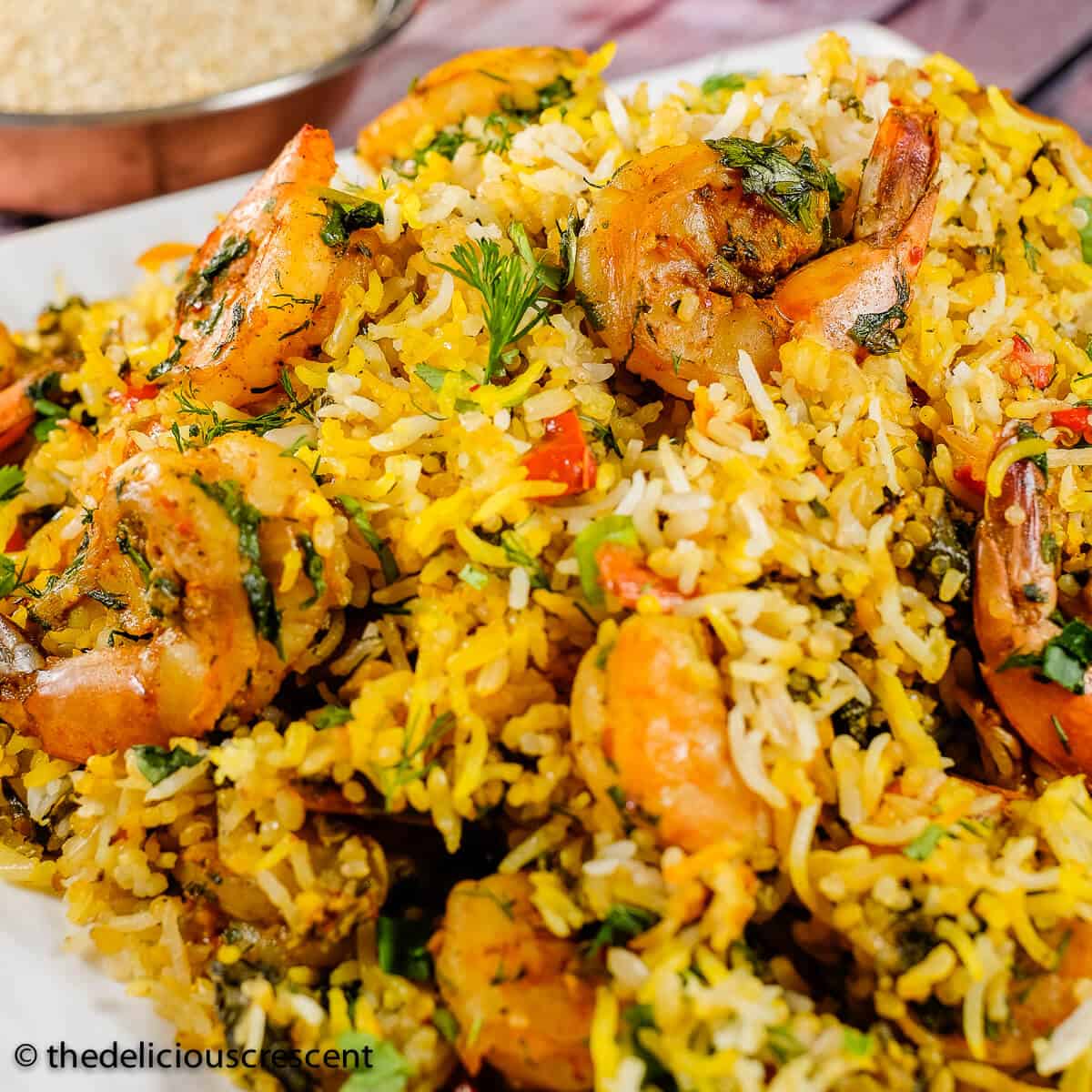
This 75-minute Persian shrimp and rice recipe serves an average family. Ingredients for this recipe include basmati and quinoa rice and onion and herb shrimp. Basmati rice is a key ingredient in Meygoo Polo. Other ingredients used in Meygoo Polo include saffron-infused water, lemon juice, cilantro, dill, and fenugreek. White and brown basmati rice and quinoa are cooked with salt and olive oil. Whole grains are included in this recipe along with separate grains of basmati rice. Shrimp is sautéed with onions, garlic, red bell peppers, curry powder, crushed red pepper, turmeric, cumin, black pepper, and fresh chopped herbs. Shrimp is cooked separately and added to the rice after cooking. Look for browned onions and partially cooked, curled shrimp. Do not add wet rice on top of the onions and other ingredients. Overcooked shrimp is the main concern. The shrimp should be removed from the pot after four to five minutes of total cooking time. Serve rice with Persian tomato and cucumber salad and other Persian foods, including Persian yogurt dip with shallots and pickles or pickled olives. According to the article, it is best to prepare vegetables, shelled shrimp, rice and quinoa, and mixtures of onion and herbs ahead of time. When cooking previously frozen rice, add shelled shrimp and a small amount of water during the last two minutes of cooking.
2. Crispy Shredded Chicken with Sweet, Sour and Savoury Sauce
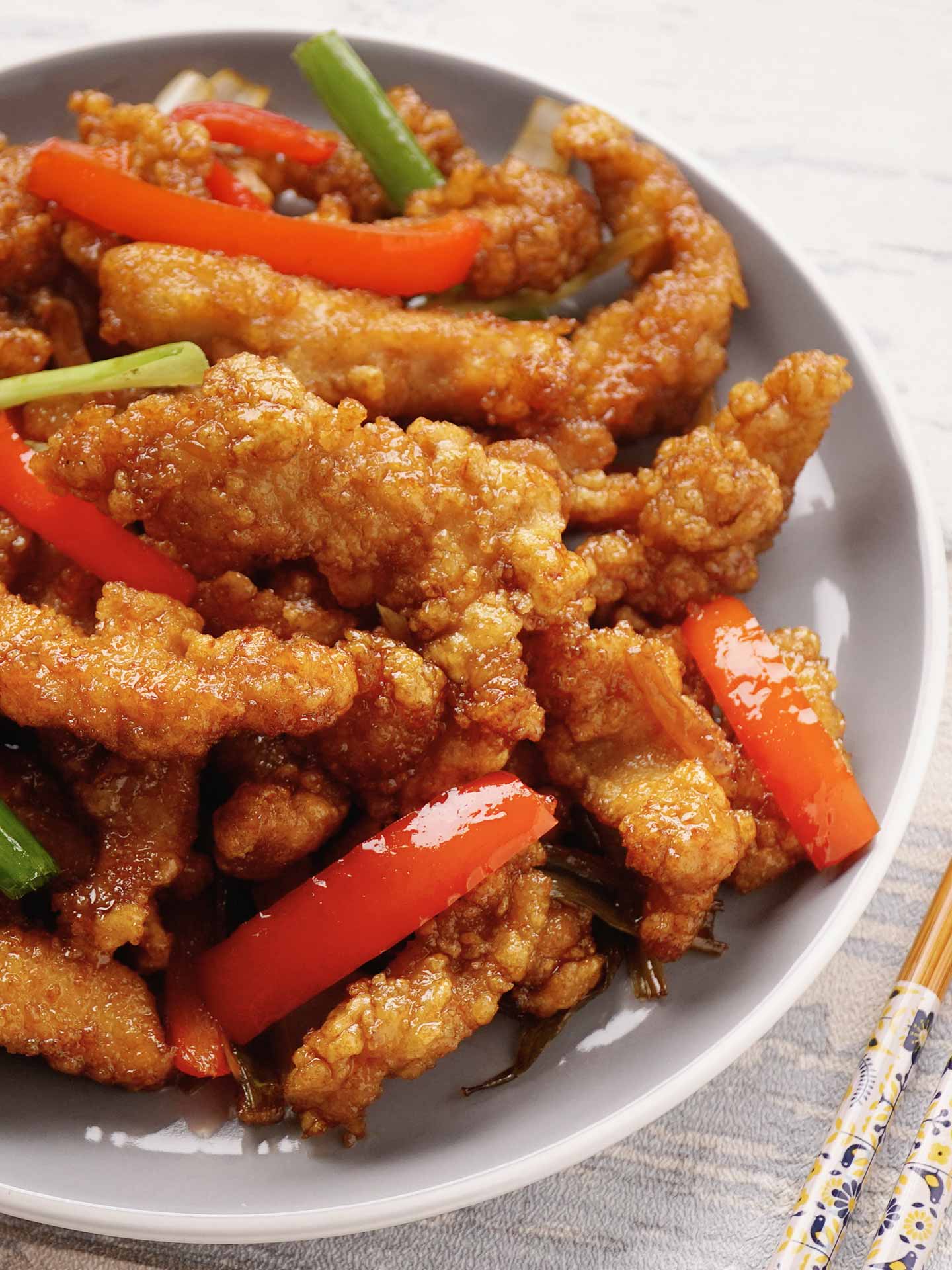
Marinating and coating chicken in egg whites and cornmeal or potato flour can help produce crispy fried chicken more quickly. Lightly coating chicken at the end of the cooking process can also add flavor without long cooking times. Chinese crispy shredded chicken is flavored with sugared and pickled bell peppers and spring onions. Boneless chicken thighs or breast are thinly sliced and coated with light soy sauce, garlic paste, sesame oil, sugar, and black pepper. Egg white is included to help flour adhere to the chicken when frying. The sauce, made with light and dark soy sauces, lemon juice, and honey, gives the dish a sweet-and-sour flavor. Garlic, bell peppers, and green onions provide texture and other flavors. The chicken should be nicely browned and crispy after a brief frying period. Arrange the chicken strips on a serving platter to keep them from sticking together. Pat off excess flour before frying to reduce browning and flour absorption while frying. Briefly simmer the sauce over high heat to keep the chicken from overcooking when tossing with sauce. Serve warm over boiled rice, fried noodles, or fried rice. Another vegetable dish can be served alongside it, if desired. This dish can also be used as an appetizer or snack. Leftovers will not be as crispy due to the soaking sauce. Best served straight away.
3. General Tso’s Chicken with Crisp Golden Coating and Tangy Sweet-Spicy Sauce
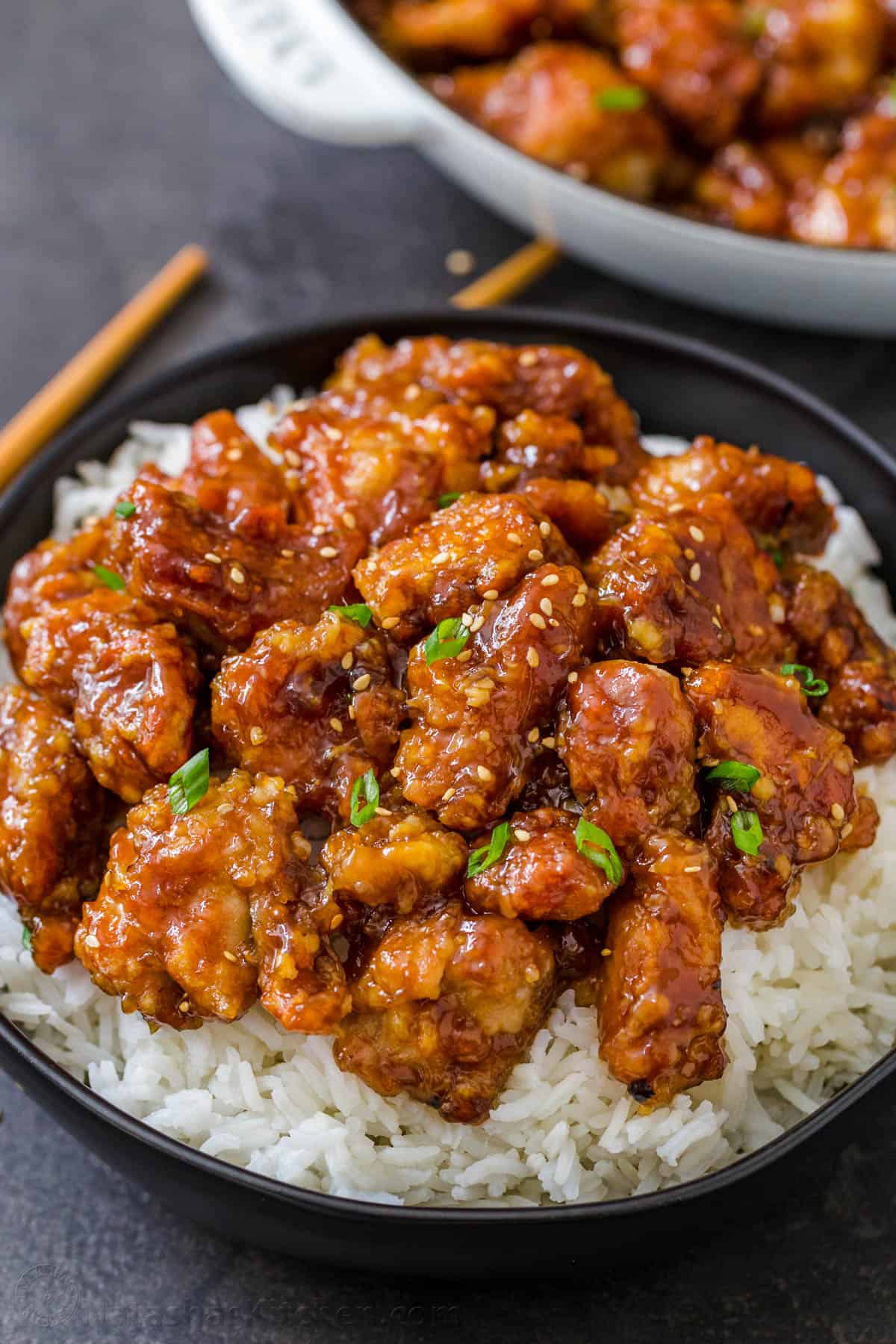
Pan-frying the cornstarch-dusted chicken in multiple batches so that all pieces are browned before serving with sauce. General Tso's chicken is a Chinese-American dish consisting of breaded and fried chicken with a thick, sweet, and spicy sauce. Chicken thighs are cut into 1-inch pieces and coated with cornstarch to add crispness to the coating. Sauce ingredients are cold water, low-sodium soy sauce, rice vinegar, hoisin sauce, sugar, and cornstarch. Mixing the sauce before cooking gives you time to prepare other parts of the dish after the chicken has cooked. Fresh ginger and garlic and red pepper flakes are cooked in the oil remaining in the pan after the chicken is cooked to add flavor to the dish. Look for a golden brown color on both sides of the chicken before serving. Cook and stir the sauce just one minute before adding the chicken. This will help evaporate the vinegar and thicken the sauce with cornstarch. Overcrowding the pan probably caused uneven browning and sticking of the chicken. Serve the chicken hot, garnished with sesame seeds, if desired. The article suggests steamed rice and steamed broccoli or Korean carrot salad as side dishes. The article notes that the sauce will penetrate the crispy batter over time, so the chicken is best consumed soon after tossing.
4. Crab Rangoon with Crispy Golden Wontons and Creamy Crab Filling
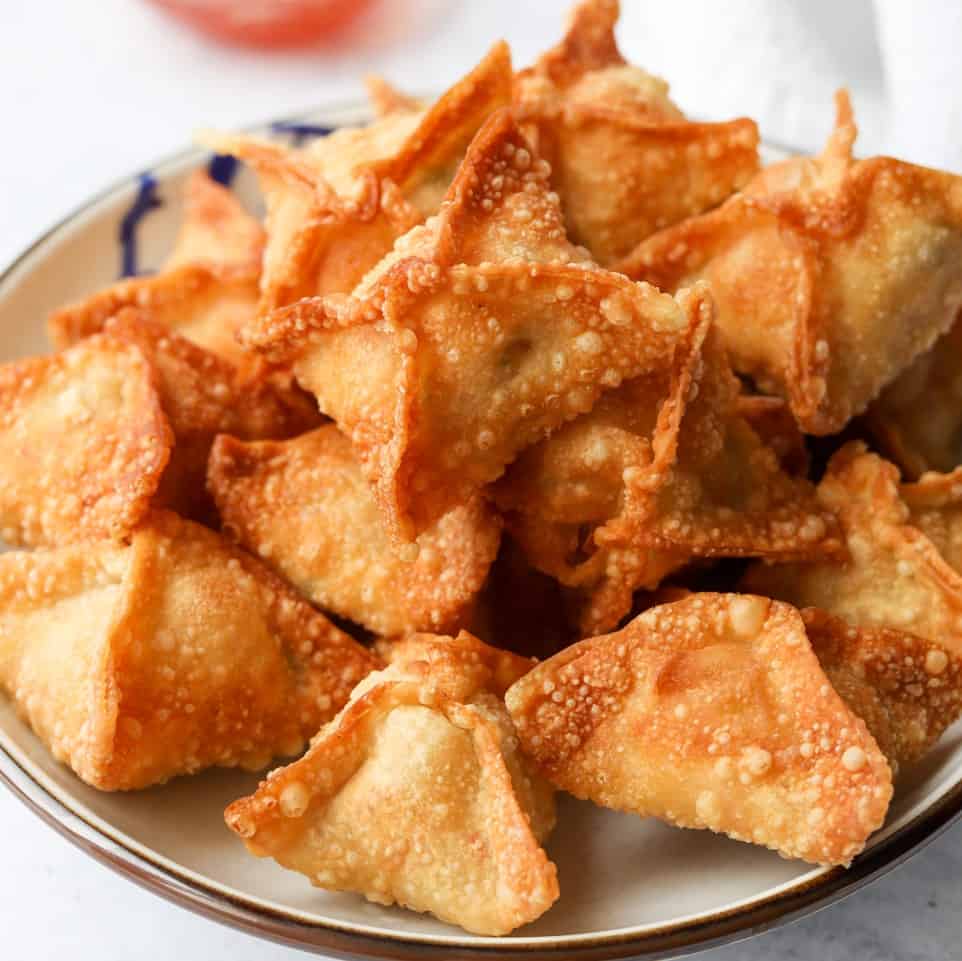
Cooking the oil at 325°F-350°F helps the wonton wrapper cook before it soaks up oil. Placing the fried wontons on a rack lets the hot filling settle. These crab rangoons are battered wontons filled with seasoned crab meat that are crispy on the outside and creamy on the inside when eaten. Room-temperature cream cheese can be mixed with imitation crab, diced green onions, soy sauce, Worcestershire sauce, garlic powder, sugar, and black pepper to create filling. Two teaspoons of filling are added to each wonton wrapper, leaving room to fold and seal the wonton. Small amounts of cold water added around the edges of the wonton wrapper will help seal the wonton without adding too much moisture. The rangoons are cooked after frying for 1 1/2 to 2 minutes on each side until the wrappers are light brown and crispy. The main problem with frying rangoons is that the oil temperature drops when too many rangoons are in the pan at once, resulting in less-crispy wrappers. Fry no more than 6 or 7 rangoons at a time and place them on a rack to drain rather than in the oil. Serve hot rangoons with sweet Thai chili sauce or plum sauce. Other rangoon appetizers or side dishes include chow mein noodles, sweet and sour chicken, and garlic green beans. Refrigerated rangoons can be crisped in an oven or air fryer. Frozen rangoons can be served hot straight from frozen.
5. Shredded Tofu Bulgogi Bowl with Spicy-Sweet Gochujang Sauce
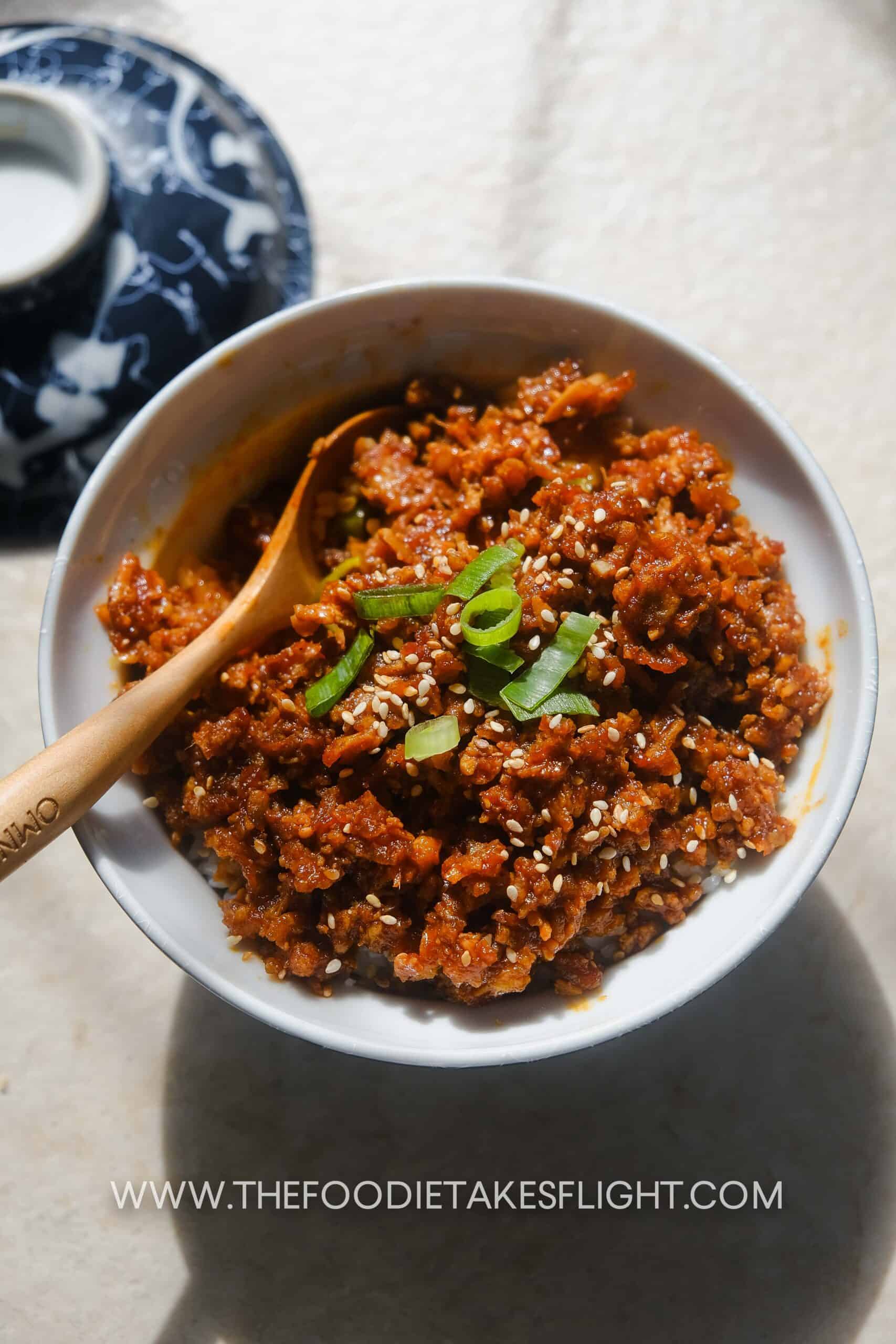
Use extra-firm tofu, vacuum-packed or otherwise, since it doesn't break apart when shredded and drains liquid as it cooks. This tofu bulgogi bowl with shredded tofu has both crunchy and tender tofu and spicy-sweet bulgogi sauce over rice. Grated Asian pear or Fuji apple add sweetness to the sauce. Gochujang sauce adds heat and other flavors. Other ingredients in the sauce include soy sauce, dark soy sauce, sesame oil, sesame seeds, ginger, garlic, and sugar. Spreading grated tofu thinly on parchment paper will help it brown well before coating it and cooking it down. Tofu in this dish should be brown and crispy on the edges but still have some white, soft areas. Variations in color and texture are good. The sauce will cook and thicken slightly from the sugar and soak into the tofu in the wok or pan. Common mistakes when making this dish include overcooking the tofu in the air fryer or oven, which results in dry, tough tofu. Serve warm over sushi rice or other short-grain or Japanese rice. Top with green onion slices and sesame seeds, if desired. Serve tofu dish shortly after preparation to enjoy a mix of crispy and seasoned tofu.
6. Sesame Beef With Sticky Savory-Sweet Sauce and Toasted Sesame
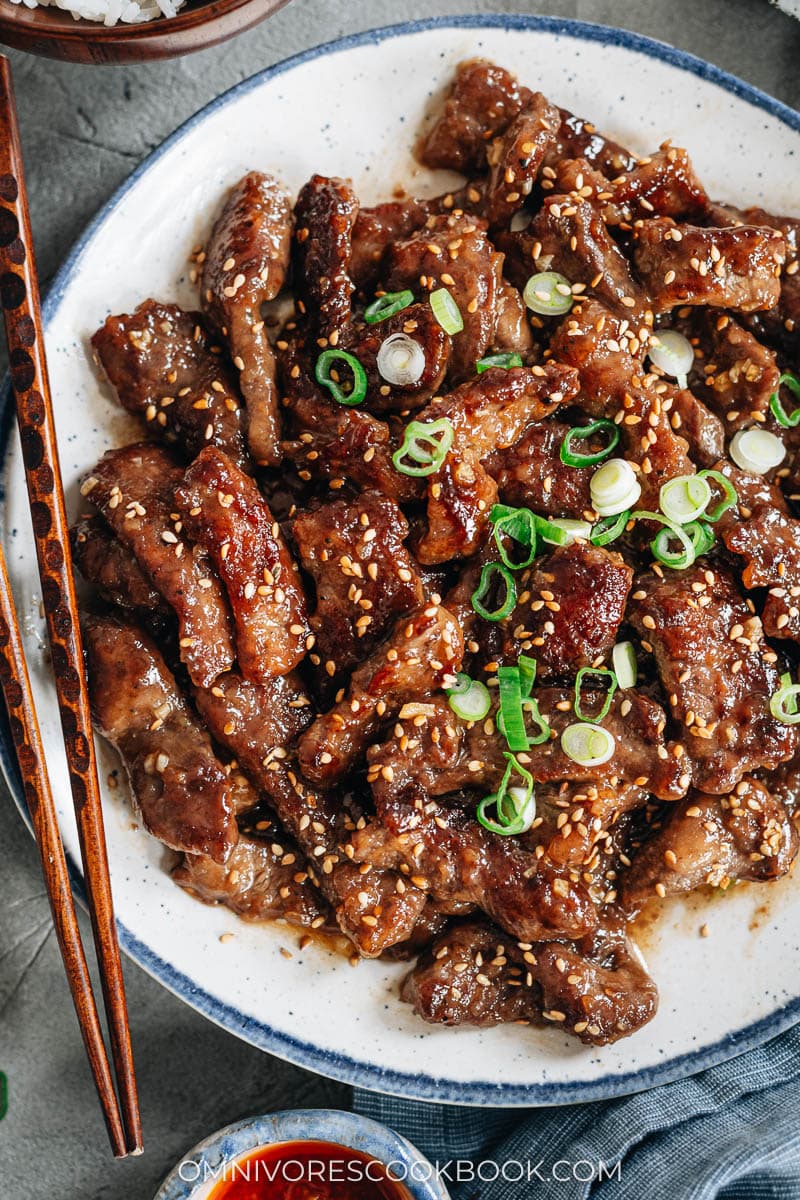
Choose flank or skirt steak with little visible fat and visible muscle fibers. Slice the steak against the grain to make small, tender portions. Pan-fry the meat to make sesame beef, a Chinese-American takeout dish that is crispy on the outside and tender on the inside, topped with sesame seeds and served with a sweet-and-savory sauce. The 15-minute marinade contains sliced steak, Shaoxing wine, salt, pepper, and cornstarch. The sauce contains chicken broth, soy sauce, Shaoxing wine, rice vinegar, sesame oil, sugar, garlic, and cornstarch. The aromatics are ready before cooking begins. Peanut oil or other vegetable oil is used for stir-frying, and toasted sesame seeds are sprinkled over the dish for flavor and a scattered garnish that stays organized in three prep bowls. In addition to cooking the beef in oil, don't turn the meat or disturb it in any way until one side is browned, then continue cooking the other side until browned. The meat should be crispy on the outside and juicy on the inside. You can tell if the meat is done by looking for thickening when stirring the sauce, which contains cornstarch. Crowding the pan is the most common problem that prevents browning and keeps cooked meat from staying juicy. Serve the beef hot with cooked rice as a side dish alongside steamed bok choy, spinach, broccoli, or asparagus. These vegetables offer a flavor contrast to the battered and fried beef. Rice can be used to soak up leftover sauce from the dish.
7. Japanese Clear Soup: A Light and Flavorful Hibachi Classic
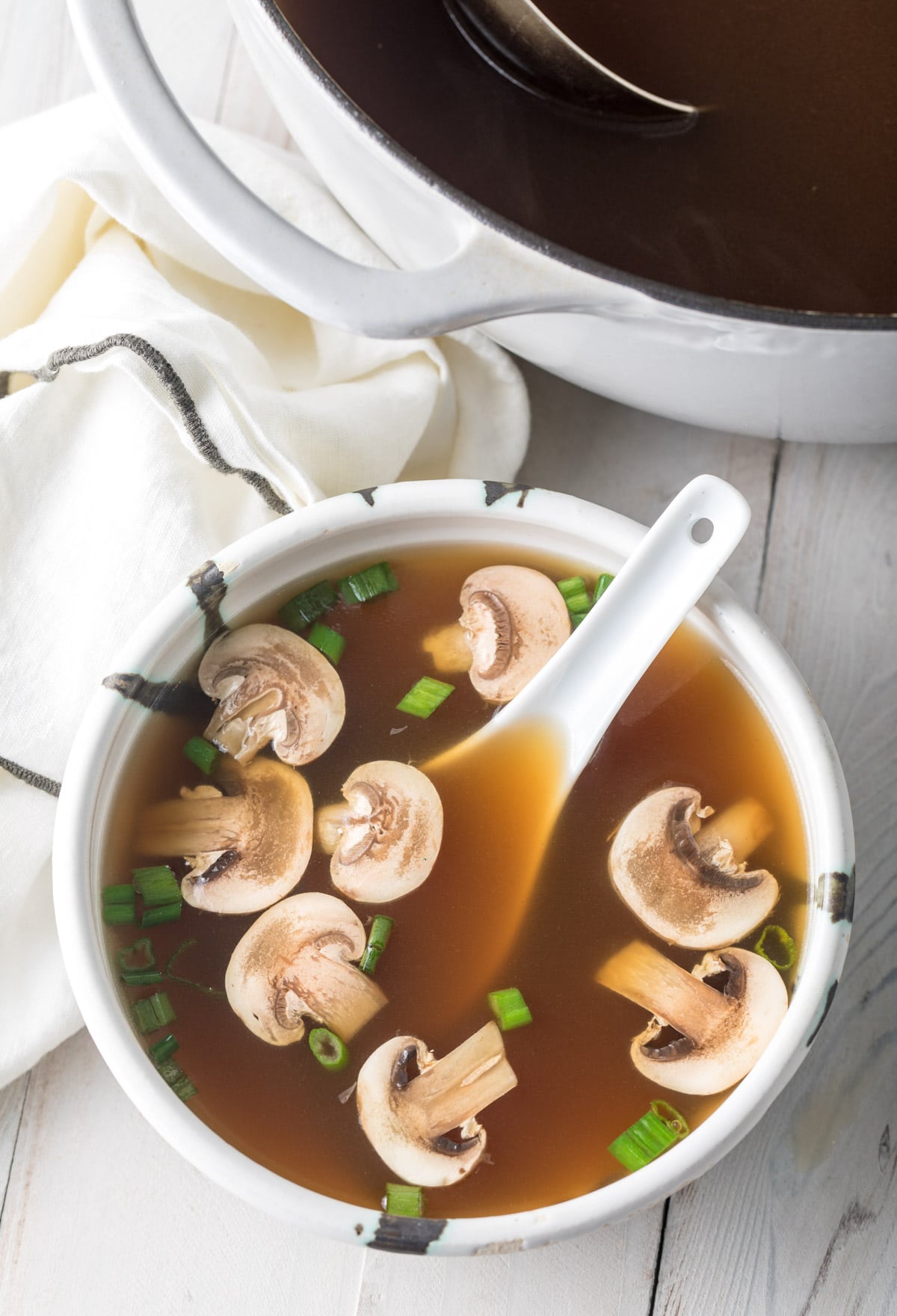
Japanese Clear Soup is a meaty soup prepared using chicken and beef broths. Ingredients commonly used in Hibachi restaurants include green onions and mushrooms. Japanese Clear Soup is a popular Hibachi starter and a warming, comforting soup. This simple recipe combines two cups of chicken broth with one cup of beef broth and other ingredients and vegetables to create a tasty dish. Aromatics and other ingredients, including roasted sesame oil and sweet onion and ginger, enhance the dish without overpowering the flavors of the other broths. As the soup cooks, you will be able to smell the soup's aroma, a sign that it is cooking correctly. Be careful not to cook the garlic too long in the sauté to prevent a bitter taste in the soup. Taste the soup frequently. Season with additional seasonings to taste. Serve this soup as a warm appetizer garnished with scallions and mushrooms. The soup's flavor develops over time and can be made in advance or for later use, holding up well in the refrigerator for up to 5 days and freezer for later use.
8. Korean Ground Beef Bowl with Garlic Ginger Sauce and Fried Egg
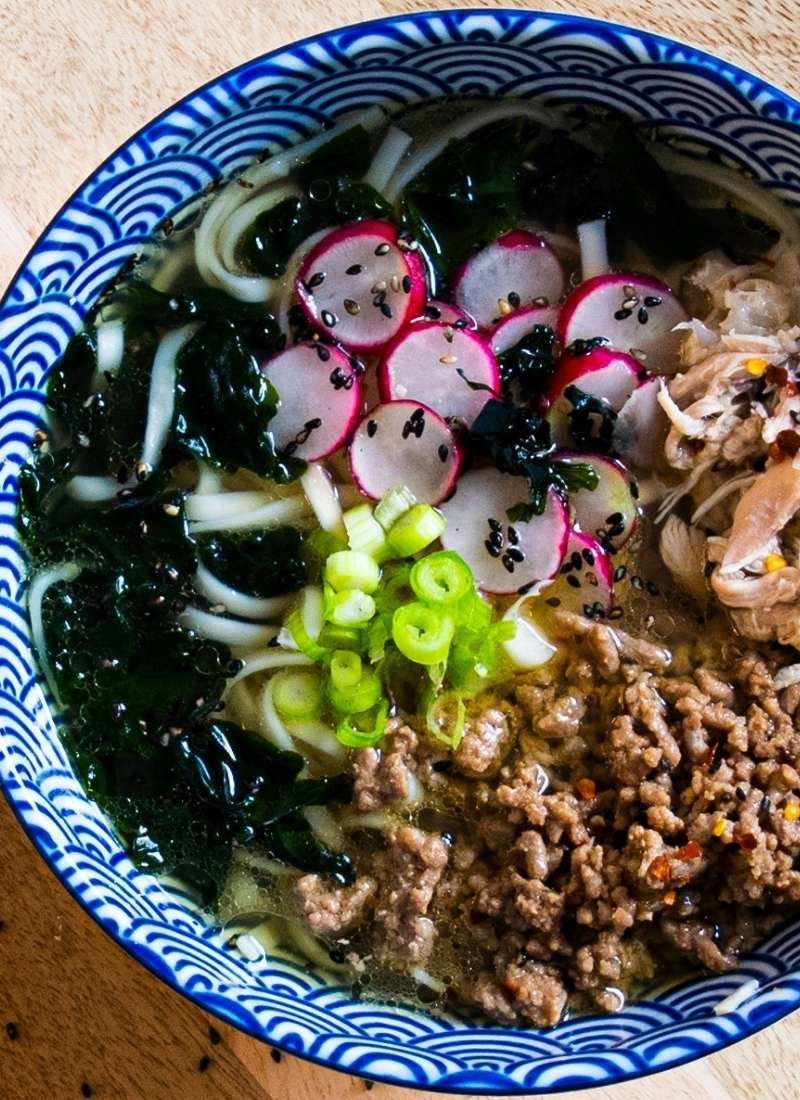
For a quick and fast weeknight dinner, this Korean ground beef bowl places saucy beef over rice along with fresh vegetables and atop a perfectly fried egg. Soy sauce, garlic, brown sugar, sesame oil, ginger, and red pepper flakes combined give the beef a savory-sweet flavor that possesses gentle heat, while green onions provide a fresh finish at the conclusion. Lean ground beef is widely regarded as the preferred option; however, the article notes that any type of ground beef can be employed. The sauce thoroughly blends together soy sauce, garlic, brown sugar, sesame oil, and ginger, along with red pepper flakes. This distinct mix gives the meat an edge with its uniquely Korean-inspired profile. Cooked rice truly forms a strong yet solid foundation. Meanwhile, the adaptable vegetable element enables the bowl to adjust to what is currently accessible. As the beef cooks, observe for it to be coated with the sauce. It should not be sitting in a pool of water indoors. Fresh garlic and fresh ginger act as essential flavor builders for the dish, so their unique aroma is expected to come through distinctly in the finished dish of beef. The easy mistake includes treating the vegetables as an afterthought; adding a generous portion creates the contrast of the rice-with-beef bowl while making it feel like a complete meal. Serve each individual bowl warm with the fried egg positioned atop it, then sprinkle some green onions over it just prior to eating. The article specifically invites selected vegetables to accompany, so family members can create their own bowls focused on the same beef with rice foundation of ingredients. Keep leftover components separate from each other when possible so the egg along with the vegetables retain their own unique textures.